State: Optional
Ohio: The Rules Your Auto Policy Must Follow
Ohio sets the minimum liability limits, leaves uninsured motorist coverage up to you and your insurer, and protects a policy from midterm cancellation once it has been in force 90 days. Here is how those rules shape your policy.
By PolicyBrook Editorial Team Updated 5-minute read
Declarations
Ohio- UM/UIM rule
- Optional
- Minimum liability
- 25/50/25
- Insurer cancellation notice
- 30 days (10 nonpayment)
- Nonrenewal notice
- 30 days
In brief
An Ohio policy must carry at least $25,000/$50,000/$25,000 of liability coverage, and you can show proof of it on your phone. Uninsured and underinsured motorist coverage is optional: the statute says a policy may include it but does not have to. Once a policy has been in force 90 days, an insurer can cancel only for four reasons, with at least 30 days' notice, or 10 days' for nonpayment. A nonrenewal also needs at least 30 days' notice. The Ohio Department of Insurance regulates insurers.
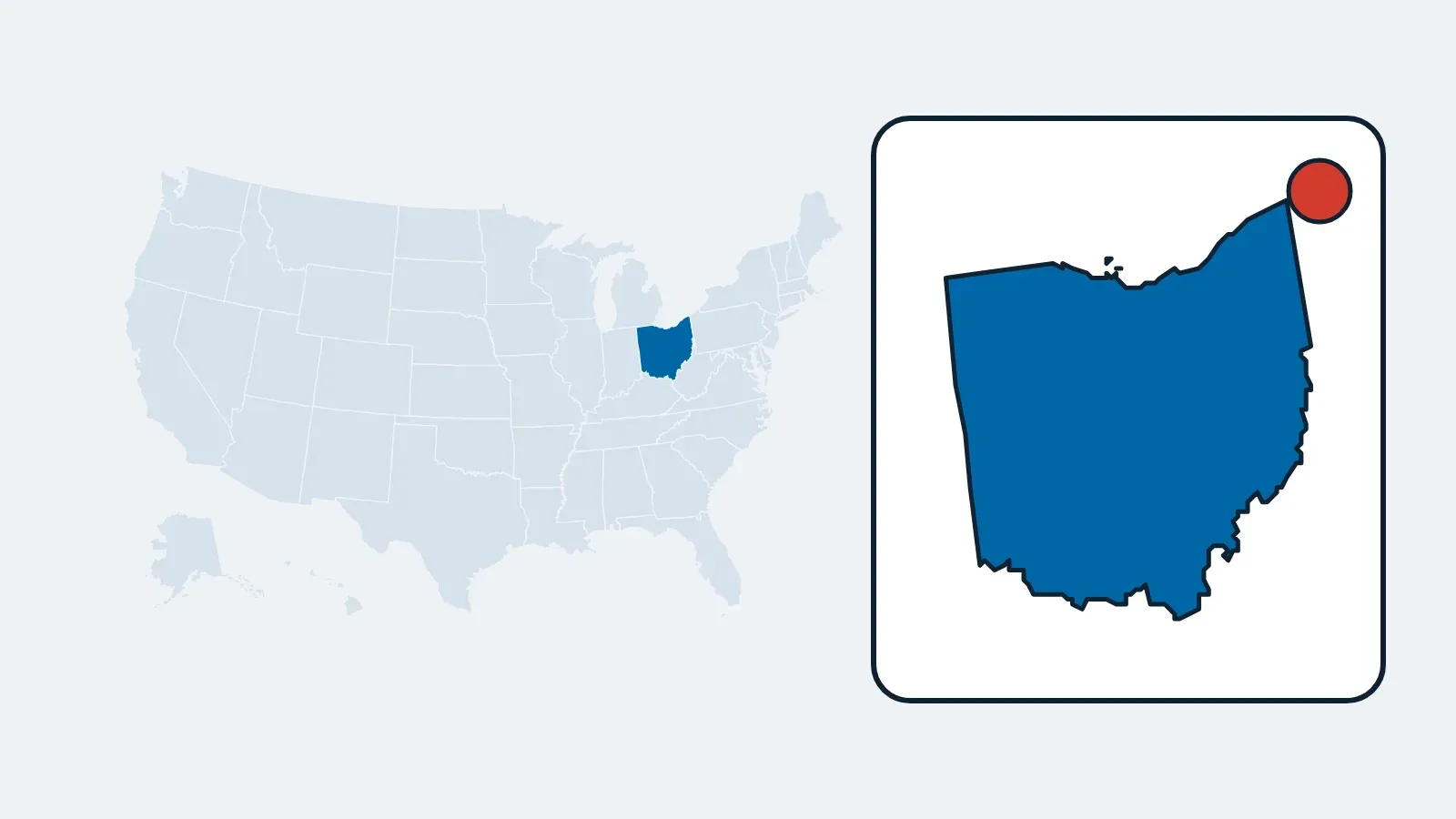
Ohio policy rules
State schedule- UM coverage rule
- Optional
- Minimum liability
- 25/50/25Proof may be shown on a phone (ORC 4509.101)
- UM/UIM rule
- OptionalORC 3937.18: a policy may, but need not, include UM or UIM
- Insurer cancellation notice
- 30 days; 10 days for nonpaymentAfter 90 days, only for the four reasons in ORC 3937.31
- Nonrenewal notice
- 30 daysReason in the notice or in writing within five days of your request
- Regulator
- Ohio Department of Insurance
Minimum limits and proof on a phone
Ohio Revised Code 4509.51 sets the liability floor: $25,000 for injury to or death of one person, $50,000 for two or more people in one accident, and $25,000 for damage to others' property. On a declarations page that is 25/50/25 under Part A.
Under ORC 4509.101(G)(1)(b), you may present proof of financial responsibility on an electronic wireless communications device, such as a phone showing your insurer's ID card. See proof of insurance for what the card shows. The limits gap worksheet helps you check whether 25/50/25 is enough for the cars and people you could hit.
UM and UIM are optional in Ohio
ORC 3937.18(A) states that an auto liability policy may include uninsured motorist coverage, underinsured motorist coverage or both, and is not required to. The current text, in effect since March 14, 2023, sets no rule that an insurer must offer the coverage or obtain a signed rejection. That is why this page lists Ohio as a state where the coverage is optional.
In practice, that puts the choice on you. Look at your declarations page: if no uninsured motorist limit appears, the policy may pay nothing toward your own injuries when an uninsured driver causes the crash. Read Part C to see what the coverage adds before you decide.
When an Ohio insurer can cancel
ORC 3937.31 requires an auto policy to run for at least one year, or to be renewable for successive terms that add up to at least a year. During that time, the insurer may cancel only for these reasons:
- Fraud, concealment or misrepresentation of a material fact when getting or renewing the policy or when making a claim.
- Suspension, revocation or expiration of the driver's license of the named insured or of a family member who drives the car. When the driver involved is not the named insured or the principal driver, the insurer must keep the policy and exclude that person instead.
- Nonpayment of premium, including payments through a premium finance plan.
- A move by the insured, or a change of the car's registration, to a state or country where the insurer cannot write auto coverage.
These limits do not apply to a new policy that has been in effect less than 90 days when the insurer mails the notice, unless it is a renewal. They also do not apply if the insurer offers to write a new policy through itself or a company under the same ownership or management.
ORC 3937.32 sets the notice. When the reason is nonpayment, the insurer must give at least 10 days' notice from the mailing date. For other reasons, the cancellation cannot take effect sooner than 30 days after the notice date. The Department's filing checklist applies the 10-day period to a policy in effect less than 90 days as well. The notice must give the reason, or say that the insurer will explain it in writing within five days of your written request, and must tell you that you can ask the superintendent of insurance to review the cancellation. The statute does not set a refund method; the cancellation refund worksheet helps you estimate one from your policy's terms.
Renewal and nonrenewal in Ohio
Under ORC 3937.34, an insurer that will not renew must mail notice to your last known address at least 30 days before the policy expires. The notice must include the policy number and the expiration date and either explain the reason or offer to explain it in writing within five days of your written request.
- Check the timing. Count the days between the notice date and the date coverage ends.
- Ask for the reason in writing if the notice does not give it.
- Ask the Ohio superintendent of insurance to review a cancellation that seems based on wrong information or against the law or the policy, no later than the cancellation date.
- Line up new coverage before the end date. See lapse and reinstatement.
Policyholder questions
Do I have to buy uninsured motorist coverage in Ohio?
No. Ohio law lets a policy include UM and UIM coverage but does not require it. Check your declarations page to see whether yours has it, and read Part C.
Can an Ohio insurer cancel my policy in the middle of the term?
During the first 90 days of a new policy, yes. After that, only for fraud or misrepresentation, a suspended, revoked or expired license, nonpayment, or a move to a place where the insurer cannot write coverage.
Can I show my Ohio insurance card on my phone?
Yes. ORC 4509.101 allows proof of financial responsibility to be shown on an electronic wireless communications device.
Sources
- Ohio Revised Code 3937.31 — Cancellation of automobile policies, permitted reasons
- Ohio Revised Code 3937.32 — Notice of cancellation
- Ohio Revised Code 3937.34 — Notice of nonrenewal
- Ohio Revised Code 3937.18 — Uninsured and underinsured motorist coverage (effective March 14, 2023)
- Ohio Revised Code 4509.51 — Owner's policy of liability insurance
- Ohio Revised Code 4509.101 — Proof of financial responsibility (effective September 30, 2025)
- Ohio Department of Insurance — Review Requirements Checklist, personal auto (7th edition, updated 2014)
Facts on this page were checked against these sources on November 15, 2026. Ohio's cancellation limits start after 90 days, not the 60 days common in other states.
Request policy quotes
Answer six questions about the policy you need. PolicyBrook passes the request to licensed insurance agents and insurers who can quote it; you compare and decide.
- The policy you need. Cars, drivers, coverage and ZIP.
- Your contact details and consent to be contacted.
- A licensed insurance agent or insurer contacts you with a quote. Nothing is bound until you sign and pay.
PolicyBrook is not paid by you. The licensed insurance agents and insurers who contact you set their own prices and terms. How we make money.
Related readings
-

Policy event
Insurer cancellation
After 60 days, only listed reasons; 10 to 60 days' notice by state, and how to appeal.
-
Policy event
Nonrenewal
Notice periods from 15 to 75 days, reasons states bar, and how to ask the regulator for review.
-
Policy part
Uninsured motorists (Part C)
Four kinds of uninsured vehicle, who is insured, limits, 60-day trial right after arbitration, state rules.