Policy event: Proof
Proof of Insurance: The Card, the Phone and the State's Database
The ID card in your glove box is only one kind of proof. Many states also get coverage data straight from insurers, and a gap that shows up there can cost you your plates even if you never get pulled over.
By PolicyBrook Editorial Team Updated 7-minute read
Declarations
Proof of insurance- Usual proof
- Insurer's ID card
- Phone display
- Allowed in many states
- Texas database updates
- Weekly from insurers
- New York lapse penalty
- $8-$12 a day, 90 days max
In brief
The insurer sends an ID card with each new policy, renewal and car change; keep it in the car. Many states also accept it on a phone: Texas, Florida, Arizona, Michigan and Ohio are among those whose laws say so. Proof is increasingly checked in the background as well. New York requires insurers to report coverage to the DMV electronically, and Texas's TexasSure program receives insurers' personal auto data every week. If you cannot show proof at a stop, state law decides what follows; if the state's records show no coverage on a registered car, the registration and sometimes the license are at stake.
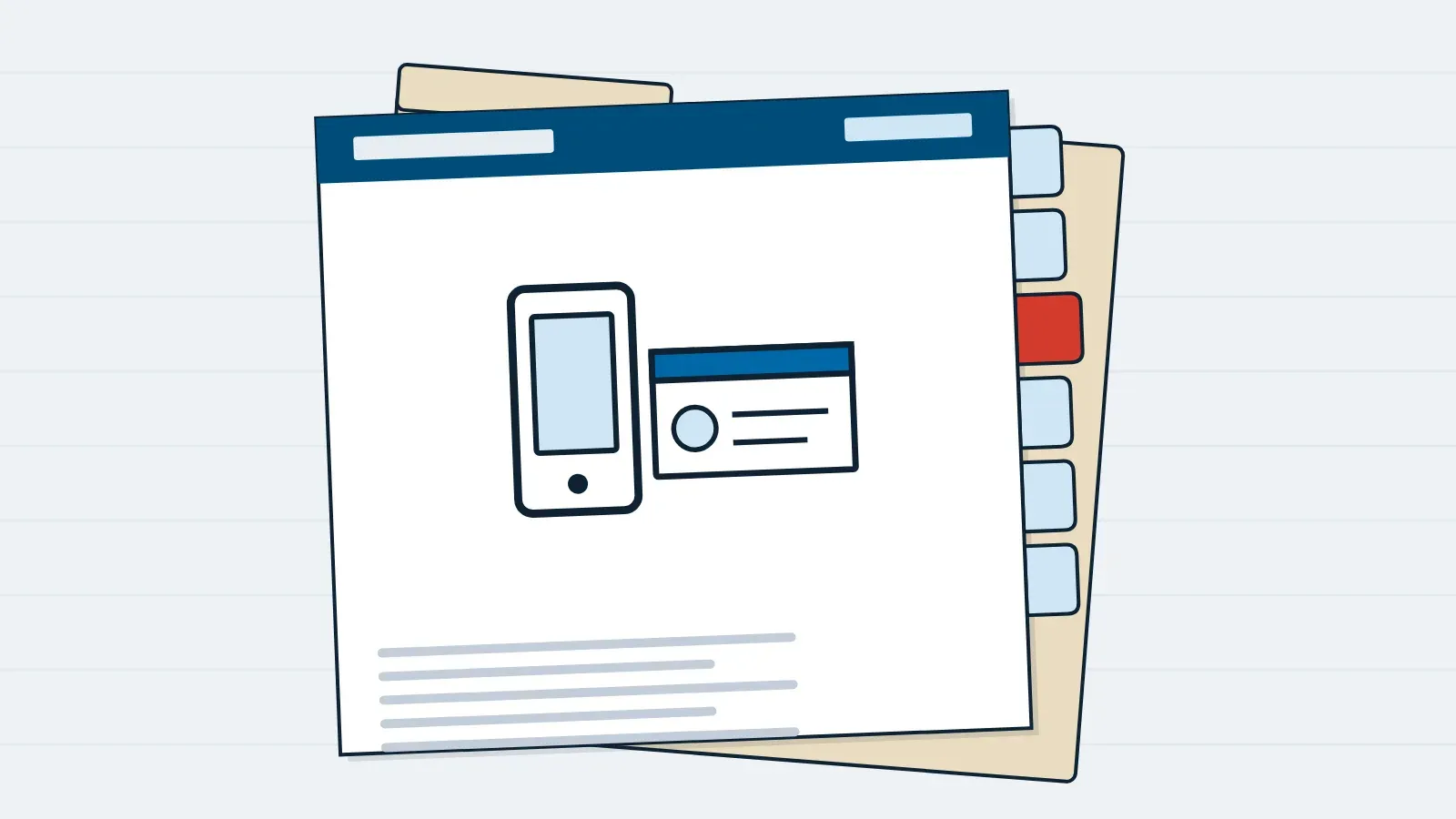
What counts as proof
The standard document is the insurance ID card. It usually shows the insurer, the policy number, the policy period and the car, and a new one comes with each renewal or change of car. States accept other documents too. Pennsylvania's motor vehicle agency, for example, accepts an ID card, a declarations page, a valid binder or a letter from the insurer, and tells drivers to keep the ID card in the vehicle. Texas law lists the policy, a binder and the ID card among the forms of evidence.
Some states use their own document. Oklahoma requires the owner to keep a current security verification form listing the vehicle and to show it to an officer who asks. New York warns that the ID card by itself does not prove coverage: it is what you use to register the car and carry in it, while the DMV relies on the insurer's electronic report.
Proof on your phone
Insurers may offer the ID card in an app, by email or as a file to save. Whether an officer must accept it on a screen depends on state law, and some laws also say that handing over the phone does not let the officer look at anything else on it. These states are confirmed on PolicyBrook's state pages, with the statute that allows it:
| State | Law | What it says |
|---|---|---|
| Texas | Transportation Code §601.053 | An image on a wireless device is valid evidence |
| Florida | §316.646 | Proof may be shown on a phone; showing it is not consent to search the device |
| Arizona | §28-4135(B) | Proof may be displayed on a wireless device in the car |
| Michigan | Vehicle Code §257.328 | An electronic copy is accepted; the officer may view only that copy |
| Ohio | ORC 4509.101 | Proof may be shown on an electronic wireless communications device |
| Colorado | §10-4-604.5 | The insurer may issue the card electronically, shown on a phone |
| Delaware | §2118(o) | Allowed when you and the insurer agree to an electronic card |
| New York | DMV rules | Insurers may issue the card in paper or electronic form |
Other states are on the list too; check your state on the state rules page. Keep a paper card as well if your phone's battery or signal is unreliable, and download the card so it opens without a connection.
When a card is wrong, fix it at once. A misspelled name or a wrong VIN can make an officer or a motor vehicle clerk doubt the card, and an old card from a previous term looks the same as no card. Ask the insurer for a corrected card, check that the policy period on it is the current one, and throw away the outdated copies in the glove box.
How states check coverage without asking you
Several states no longer wait for a traffic stop. Insurers send policy data to the state, and the motor vehicle agency compares it with registrations.
- New York. The DMV says your insurer must notify it electronically each time you obtain liability coverage, and paper proof or email from you does not count. Coverage reported as ended on a registered car leads to action against the registration.
- Texas. A 2010 Texas Department of Insurance bulletin describes TexasSure as the state's financial responsibility verification program: insurers writing personal auto policies report their full book of business every week, and county tax assessor-collectors and the Highway Patrol use it to confirm coverage on registered vehicles.
- Florida. The Department of Highway Safety and Motor Vehicles requires coverage to stay in force for the whole registration period, even if the car is not driven, and tells owners to surrender the plate before cancelling.
- Massachusetts and Indiana. Massachusetts insurers report cancellations to the Registry of Motor Vehicles; Indiana insurers file proof with the Bureau of Motor Vehicles electronically when the bureau asks you to verify coverage.
If you cannot show proof
Not having the card with you and not having insurance are different problems. If you were insured but could not show it, read the citation or notice for how to prove coverage afterward, and keep the documents that show the policy was in force on that date. If the car was uninsured, the penalties are set by state law and can be heavy:
- New York. The registration is suspended for as many days as the car was uninsured with plates not surrendered, and the license too if that runs past 90 days. For a lapse of 90 days or less, the DMV allows a civil penalty instead of surrendering plates: $8 a day for days 1 to 30, $10 for days 31 to 60 and $12 for days 61 to 90.
- Florida. The license and plate may be suspended for up to three years, with a reinstatement fee of up to $500, and there is no hardship license for insurance suspensions.
- Kansas. Every termination notice must warn that driving without insurance is a class B misdemeanor and can lead to suspension of the registration and license.
A gap also follows you to the next insurer, which may ask about continuous coverage; see lapse and reinstatement.
The steps, in order
- Check each new ID card. Names, policy number, dates and VIN must match the car and the declarations page.
- Keep proof in every car. A paper card, and the electronic card where your state accepts it.
- Replace the card after every change. A new car, a renewal or a new insurer means a new card.
- Answer any verification letter from the motor vehicle agency quickly. Ask your insurer to confirm coverage directly if the agency allows it.
- Before you cancel, handle the plates. Surrender or transfer them where your state requires it.
- Keep the declarations page handy. It shows your limits; the limits gap worksheet tests whether they are enough.
Policyholder questions
Can I show my insurance card on my phone?
In many states, yes. Texas, Florida, Arizona, Michigan and Ohio are among the states whose laws accept it, and Delaware allows it when you and the insurer agree. Check your state on the state rules page.
Does the state know if my insurance lapses?
In states with electronic reporting, often yes. New York requires insurers to report coverage to the DMV electronically, and Texas insurers report personal auto policies to TexasSure every week.
What if I was insured but did not have the card?
Follow the instructions on the citation or notice. Keep the declarations page or a letter from the insurer showing the policy was in force on that date, and ask the insurer for one if you need it.
Is the ID card proof that I have coverage?
It is evidence, but New York's DMV notes that the card alone does not prove coverage there; the insurer's electronic report does. If a card and the state's records disagree, ask the insurer to correct its report.
Sources
- New York State DMV — Auto liability insurance requirements
- Texas Department of Insurance — Commissioner's Bulletin B-0032-10, TexasSure (August 16, 2010)
- Texas Transportation Code, Section 601.053 — Evidence of financial responsibility
- Florida Department of Highway Safety and Motor Vehicles — Insurance requirements
- Florida Statutes (2026), § 316.646 — Security required; proof of security and display
- Arizona Revised Statutes §28-4135 — Evidence of financial responsibility on a wireless device
- Michigan Compiled Laws, Section 257.328 — Proof of insurance, including electronic copies
- Delaware Code, Title 21, § 2118 — Required insurance and electronic ID cards
- Massachusetts General Laws, Chapter 175, Section 113A — Motor vehicle policy cancellation
- Ohio Revised Code 4509.101 — Proof of financial responsibility
- C.R.S. §10-4-604.5 — Electronic proof of insurance (via Colorado Public Law)
- PennDOT — Insurance overview
- Oklahoma Statutes, 47 O.S. §7-602 — Security verification form (Justia)
- K.S.A. 40-3118 — Termination notice and proof of insurance
- Indiana Bureau of Motor Vehicles — Proof of financial responsibility
Facts on this page were checked against these sources on November 15, 2026. The TexasSure reporting schedule comes from a 2010 TDI bulletin; state penalties change, so the motor vehicle agency's current page decides.
Request policy quotes
Answer six questions about the policy you need. PolicyBrook passes the request to licensed insurance agents and insurers who can quote it; you compare and decide.
- The policy you need. Cars, drivers, coverage and ZIP.
- Your contact details and consent to be contacted.
- A licensed insurance agent or insurer contacts you with a quote. Nothing is bound until you sign and pay.
PolicyBrook is not paid by you. The licensed insurance agents and insurers who contact you set their own prices and terms. How we make money.
Related readings
-
Policy event
Coverage lapse and reinstatement
What a gap costs, reinstatement vs a new policy, and Louisiana's 90-day first-lapse rule.
-
Policy event
Binding coverage
Binders, the start date and time (often 12:01 a.m.), and the 60-day window when a new policy can be cancelled.
-
Policy part
The declarations page
Named insured, policy period, cars, drivers, limits, deductibles and forms: every line and what to check.