State: Optional
Michigan: The Rules Your Auto Policy Must Follow
Michigan is a no-fault state. Its law sets default liability limits you can lower only on a signed form, makes you pick a PIP medical level, and lets you appeal most cancellations to the state. Here is how that shapes your policy.
By PolicyBrook Editorial Team Updated 6-minute read
Declarations
Michigan- UM/UIM rule
- Optional
- Minimum liability
- 250/500/10; 50/100 option
- Insurer cancellation notice
- 20 days (10 nonpayment)
- Nonrenewal notice
- 20 days
In brief
A Michigan policy carries bodily injury liability of $250,000/$500,000 unless you sign the state's form to choose lower limits, which can go no lower than $50,000/$100,000; property damage liability is $10,000. Every policy also includes no-fault personal injury protection (PIP), with a medical level you choose, and property protection insurance. Uninsured motorist coverage is optional. After 55 days, an insurer can cancel only for nonpayment or a suspended or revoked license, with 20 days' notice for most cancellations and a 7-day window to appeal. The Department of Insurance and Financial Services (DIFS) enforces these rules.
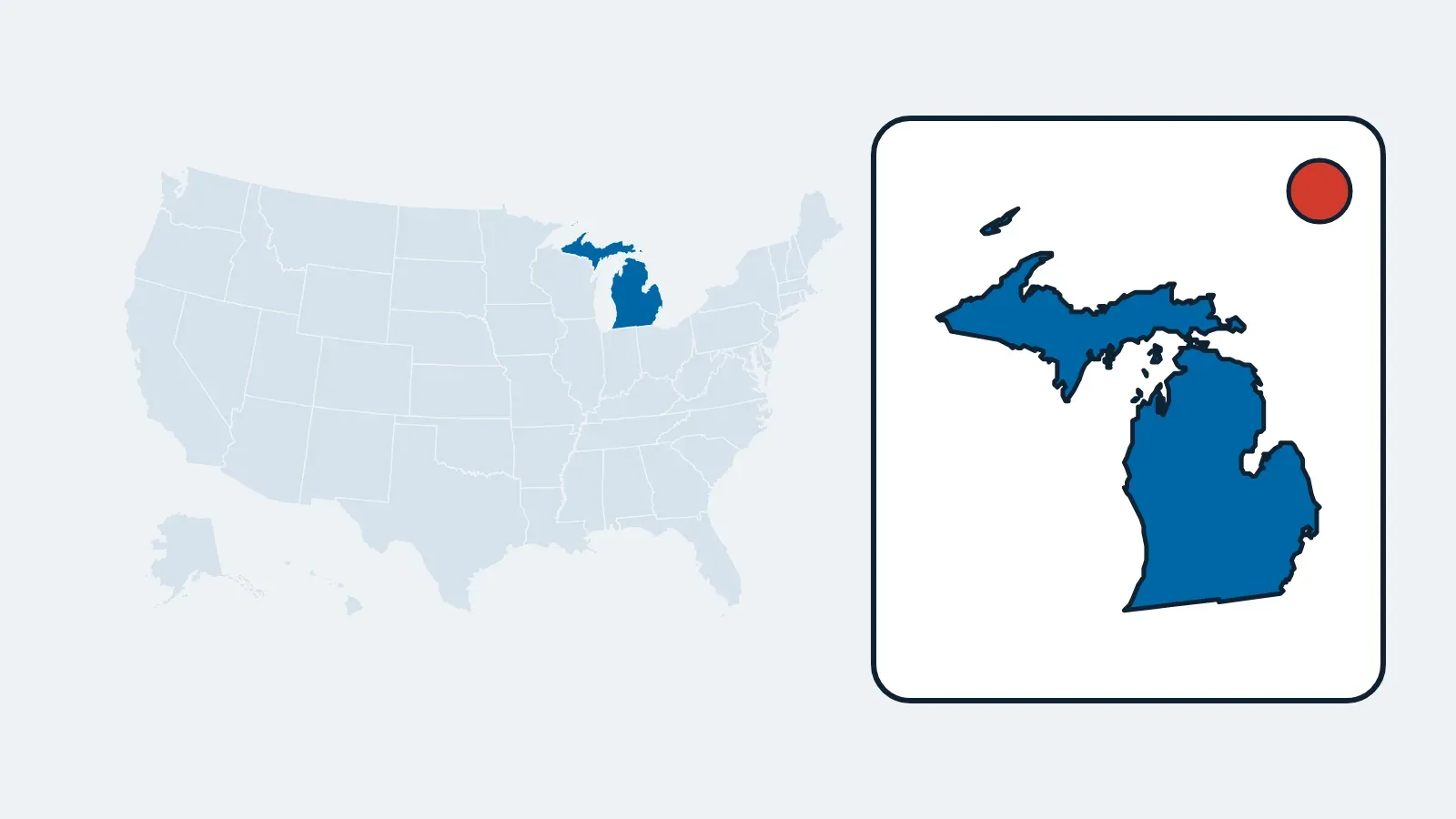
Michigan policy rules
State schedule- UM coverage rule
- Optional
- Minimum liability
- 250/500/10 by default; as low as 50/100/10 on a signed state formPlus no-fault PIP and $1 million property protection insurance
- UM/UIM rule
- Optional
- Insurer cancellation notice
- 20 days; 10 days for nonpaymentAfter 55 days, only for nonpayment or a license suspension or revocation; 7 days to appeal
- Nonrenewal notice
- 20 daysWithout the notice, a nonrenewal counts as a cancellation
- Regulator
- Michigan Department of Insurance and Financial Services (DIFS)
Liability limits on a Michigan policy
Section 500.3009 of the Michigan Insurance Code sets the default bodily injury limits for policies issued or renewed after July 1, 2020 at $250,000 for one person and $500,000 for everyone hurt in one accident. You can pick lower limits, but only by signing a form issued by DIFS that spells out the risk, and the floor is $50,000 per person and $100,000 per accident. Property damage liability must be at least $10,000. If you never sign the form, the higher default applies.
Two more pieces are built into every Michigan no-fault policy. Personal injury protection pays your own medical bills and lost wages after a crash, whoever caused it. Property protection insurance (PPI) pays for damage your car does to other people's property in Michigan, up to $1 million per accident under section 500.3121. Compare your limits with a serious crash using the limits gap worksheet.
You may show your certificate of insurance on a phone. Section 257.328 of the Michigan Vehicle Code accepts an electronic copy, lets the officer look only at that copy, and says showing it is not consent to search the device.
Choosing a PIP medical level
For policies issued or renewed after July 1, 2020, the named insured picks a PIP medical limit per person, per accident (section 500.3107c and the DIFS consumer pages). If you choose nothing, the unlimited level applies. The lower levels depend on what other health coverage your household has.
| PIP medical level | Who can choose it |
|---|---|
| Unlimited | Anyone; the default if no choice is made |
| Up to $500,000 | Anyone |
| Up to $250,000 | Anyone |
| Up to $250,000 with exclusions | Named insured or household members with qualifying non-Medicare health coverage |
| Up to $50,000 | Named insured on Medicaid, with household members covered elsewhere |
| Opt out of PIP medical | Named insured with Medicare Parts A and B, with household members covered elsewhere |
Your choice shows on the declarations page next to PIP. Read personal injury protection for what the coverage pays beyond medical bills.
Uninsured motorist coverage is optional
The DIFS consumer guide states that Michigan law does not require uninsured or underinsured motorist coverage. Without them, your own policy pays nothing toward the injury damages that an at-fault driver with no insurance, or too little, would owe you beyond what PIP covers. If you want them, ask the insurer to add them and check the limit on your declarations page. See Part C for how the coverage works.
When a Michigan insurer can cancel your policy
Michigan's Essential Insurance Act (chapter 32 of the Insurance Code) controls most cancellations. Under section 500.3220, an insurer may cancel during the first 55 days after the original issue date if it finds the risk unacceptable. After 55 days, and from day one on a renewal, the only reason the chapter allows is a final suspension or revocation of the driver's license of the named insured or of another driver who lives in your home or regularly drives the car. Nonpayment of premium is handled separately and is always a reason to cancel.
- Nonpayment: at least 10 days' written notice, mailed to your last known address (section 500.3020).
- Any other reason: at least 20 days' notice by certified mail, return receipt requested, stating the reason (section 500.3224).
- Every cancellation notice must warn you that you may not drive the car, or any other car, without the insurance the law requires.
You can appeal a cancellation, except one for nonpayment or one made inside the first 55 days. The notice must tell you in bold type that you have 7 days from the mailing date to appeal to the department; DIFS then holds a hearing. Act on the same day you open the letter.
When you cancel, section 500.3020 requires a refund of the premium above the pro rata amount for the time the policy ran. An insurer may keep a minimum premium only under a rule the state approved, and that minimum does not apply to a renewal policy or when you replaced the coverage with another insurer and show proof. The cancellation refund worksheet estimates the pro rata figure.
Nonrenewal in Michigan
Under section 500.3204, an insurer that decides not to renew must mail you a notice by first-class mail at least 20 days before the policy ends. If it fails to send that notice, the refusal is treated as a cancellation, which brings in the cancellation rules above. Twenty days is a short window, so start shopping as soon as the notice arrives; see nonrenewal for the steps.
Where to ask and complain
- Ask the insurer to explain in writing. DIFS asks consumers to try the company first and keep its written answer.
- Appeal a cancellation within 7 days of the mailing date shown on the notice, using the instructions printed on it.
- Contact DIFS at 877-999-6442 or michigan.gov/difs to ask a question or file a complaint.
Policyholder questions
Can I lower my Michigan liability limits to save money?
Yes, but only by signing the state's election form, and no lower than $50,000 per person and $100,000 per accident for bodily injury. Without a signed form, the 250/500 default stays on the policy.
Can a Michigan insurer cancel my car insurance after a claim?
Not after the first 55 days: past that point the law allows cancellation only for nonpayment or a final license suspension or revocation in the household. A claim history can still play a role at renewal.
How long do I have to appeal a Michigan cancellation notice?
Seven days from the date the notice was mailed. Cancellations for nonpayment and those made in the first 55 days cannot be appealed.
Sources
- Michigan Compiled Laws, Section 500.3009 — Minimum liability limits and the lower-limit election
- Michigan Compiled Laws, Chapter 32 (Essential Insurance), Sections 500.3204-500.3262
- Michigan Compiled Laws, Section 500.3020 — Cancellation notice and refunds
- Michigan Compiled Laws, Section 257.328 — Proof of insurance, including electronic copies
- Michigan DIFS — Choosing PIP medical coverage
- Michigan DIFS — Comprehensive Guide to Auto Insurance
Facts on this page were checked against these sources on November 15, 2026. Michigan's default liability limits and PIP medical choices apply to policies issued or renewed after July 1, 2020.
Request policy quotes
Answer six questions about the policy you need. PolicyBrook passes the request to licensed insurance agents and insurers who can quote it; you compare and decide.
- The policy you need. Cars, drivers, coverage and ZIP.
- Your contact details and consent to be contacted.
- A licensed insurance agent or insurer contacts you with a quote. Nothing is bound until you sign and pay.
PolicyBrook is not paid by you. The licensed insurance agents and insurers who contact you set their own prices and terms. How we make money.
Related readings
-
Endorsement
Personal injury protection
No-fault injury coverage: $10,000 required in Florida, rejectable in Texas, offered in Washington.
-
Policy event
Insurer cancellation
After 60 days, only listed reasons; 10 to 60 days' notice by state, and how to appeal.
-
Policy event
Nonrenewal
Notice periods from 15 to 75 days, reasons states bar, and how to ask the regulator for review.