Endorsement: Coverage you can add
New Car Replacement: Paying for a New Car, Not a Used One, After an Early Total Loss
A new car loses value the day you drive it home, and the standard policy pays only that lower value. This endorsement changes the payout for a short window. Here is how long the window lasts and what it leaves out.
By PolicyBrook Editorial Team Updated 5-minute read
Declarations
New car replacement- What it pays
- New car, same model
- Typical window
- 12 months / 15,000 miles
- Applies to
- Total losses only
- Leased cars
- Excluded in two forms
In brief
After a total loss, Part D pays the car's actual cash value, which is reduced for depreciation. A new car replacement endorsement removes that reduction for a car bought new, so the insurer pays what it costs to replace it with a new car of the same make, model and equipment, minus your deductible. It applies only for a limited time, such as the first 12 months or 15,000 miles, whichever comes first, only to a total loss, and in two of the versions we read not to leased cars.
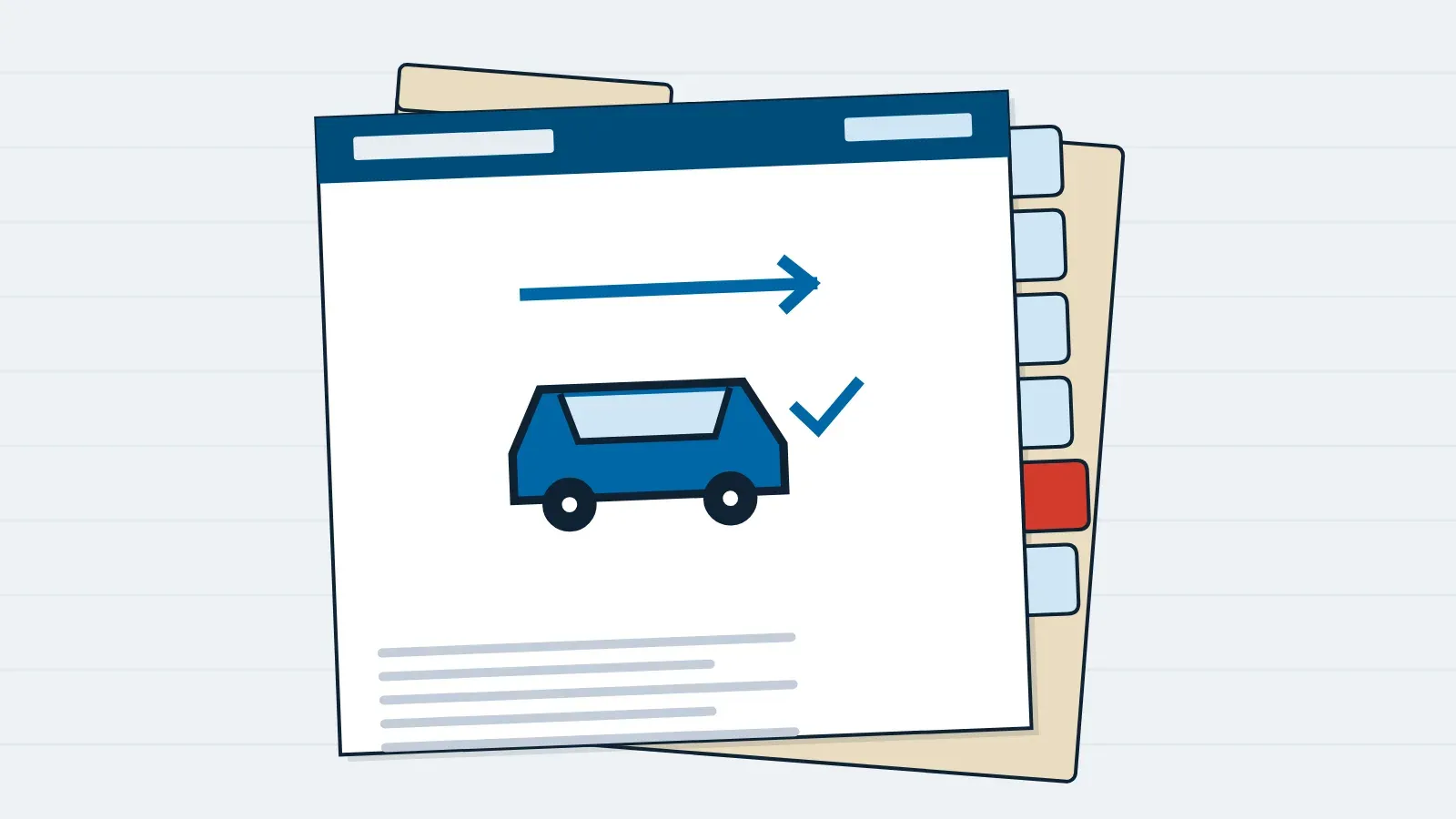
What the endorsement changes in Part D
The standard personal auto policy limits a physical damage payment to the lesser of the car's actual cash value or the cost to repair or replace it with property of like kind and quality. For a total loss, actual cash value is adjusted for depreciation and physical condition. On a car only months old, that adjustment can be large, and the check may not buy the same car new.
A new car replacement endorsement takes the depreciation step out for a qualifying car. One filed specimen, form AS 2112 03 16 posted on the Nevada Division of Insurance site, says the insurer pays the full cost of replacement, less the deductible, without the depreciation adjustment. Its ceiling is the cost of a never-titled car of the same year, make, model and equipment, or the most similar car in class and body type if that one is not available. The insurer may pay in money or replace the car.
Insurers write their own versions, and the terms differ. The table compares three published ones.
| Version | When the loss must happen | What it pays |
|---|---|---|
| Filed endorsement AS 2112 03 16 | First 12 months of coverage or first 15,000 miles, whichever comes first | Full replacement cost with a new car of the same year, make, model and equipment, less the deductible |
| One national insurer's optional coverage | First year of ownership and before 15,000 miles | The cost of a brand-new car of the same make and model |
| One national insurer's built-in coverage | Within 365 days of purchase or before 12,000 miles, whichever comes first | A new car of the same make, model, year and equipment, less the deductible |
How it shows on the declarations page
The endorsement attaches to a specific car. On the declarations page, look for a coverage line or a note for that car and the endorsement's form number in the forms list. The filed form above applies only to a car shown in the declarations with a premium for collision or other-than-collision coverage, so a car without physical damage coverage cannot carry it.
Some insurers include a version in every policy or in a package, so it may not appear as a separately priced line. If you bought a new car and are unsure, ask the insurer which form applies and when the window ends for that car.
When it pays and when it does not
- Pays: a total loss of a car that was new and never titled before, inside the time and mileage window. The filed form treats a car as a total loss when repair cost plus salvage value reaches its actual cash value.
- Pays: only for the kind of loss the car is insured for. A crash needs collision coverage; a theft or a flood needs other-than-collision coverage.
- Does not pay: repairs. A car that is fixed is paid under the normal Part D rules.
- Does not pay: once the window closes. On the day the car passes 15,000 miles under the filed form, the payout goes back to actual cash value.
- Does not apply: to substitute or nonowned autos, or to cars leased for six months or longer, under the filed form. Another insurer also leaves out leased cars.
Worked example: eight months and 9,000 miles
Say you bought a new car eight months ago, and it has 9,000 miles when a covered collision totals it. The figures below are an illustration. The insurer sets its actual cash value at $30,500, your collision deductible is $500, and the same year, make, model and equipment costs $36,000 new today.
Without the endorsement, Part D pays $30,500 − $500 = $30,000. With the endorsement, the payment is $36,000 − $500 = $35,500. The endorsement adds $35,500 − $30,000 = $5,500.
Now change one fact: the car has 15,200 miles. Under a 12-month or 15,000-mile form the window has already closed, so the payment falls back to $30,000, even though the car is still under a year old. Under a form with a 12,000-mile limit, the window would have closed even earlier.
Who needs it, and how it compares with gap
The endorsement suits a buyer who wants a new car again after an early total loss and who could not cover the difference between the depreciated value and the price of a new one. It does nothing for a used car, and it stops mattering after the first year or so.
Gap coverage answers a different question. It pays the lender what you still owe above the car's value; new car replacement raises the payment itself so you can buy the same car again. A buyer with a small down payment may look at both for the first year.
- Check the window. Note the date and the mileage limit in your form, and put the end date in your calendar.
- Confirm it covers your loss types. Read whether theft and other non-collision losses count.
- Check eligibility. Leased cars and cars titled before you bought them are outside the forms we read.
- Keep collision and comprehensive. The coverage works only on a car that carries them.
- Remove it when the window closes. If the insurer charges for it separately, ask whether the premium stops on its own.
Policyholder questions
Does new car replacement cover a used car?
No. The filed form and one insurer's published terms require a car that was new and never titled before you bought it.
What happens if the same model is no longer sold?
The filed form we read pays for the most similar new car in class and body type. Other insurers set their own rules, so check yours.
Is new car replacement the same as better car replacement?
No. One insurer's better car replacement pays the actual cash value of a car one model year newer, for cars that no longer qualify for new car replacement. It is a separate coverage with its own terms.
Does it apply to a leased car?
Not in two of the versions we read, which both exclude leased cars. For the balance on a lease after a total loss, see gap coverage and leased or financed cars.
Sources
- Nevada Division of Insurance — Specimen endorsement AS 2112 03 16, New Vehicle Replacement Cost Coverage (Personal Auto)
- PropertyCasualty360 (FC&S) — Personal Auto Policy, Part D: limit of liability and actual cash value
- Liberty Mutual — New car replacement
- Amica — New and better car replacement
- Pekin Insurance — Auto coverage enhancements (replacement cost coverage for new autos)
Facts on this page were checked against these sources on November 15, 2026. Time and mileage windows, eligible cars and covered losses differ by insurer and state; your endorsement decides.
Request policy quotes
Answer six questions about the policy you need. PolicyBrook passes the request to licensed insurance agents and insurers who can quote it; you compare and decide.
- The policy you need. Cars, drivers, coverage and ZIP.
- Your contact details and consent to be contacted.
- A licensed insurance agent or insurer contacts you with a quote. Nothing is bound until you sign and pay.
PolicyBrook is not paid by you. The licensed insurance agents and insurers who contact you set their own prices and terms. How we make money.
Related readings
-
Endorsement
Gap insurance
Pays the loan balance above your car's value, with caps such as 25%, and how it differs from a dealer waiver.
-
Policy part
Damage to your auto (Part D)
Collision vs other than collision, non-owned autos, $20-a-day transport, exclusions and actual cash value.
-
Household
A leased or financed car
Collision and comprehensive, deductible limits, loss payee, lessor as additional insured, and gap after a total loss.